


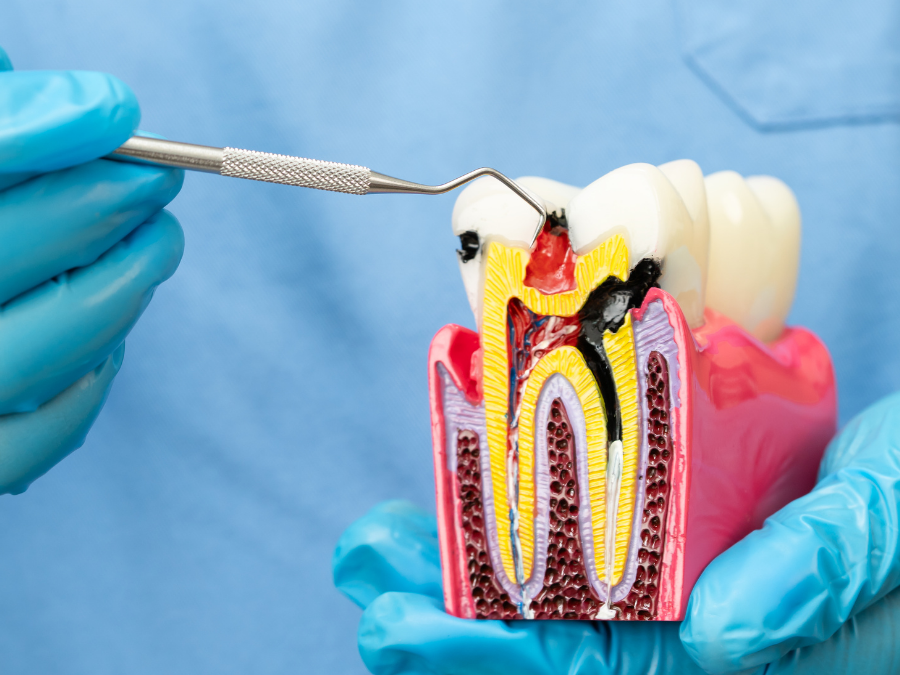
Most root canal treated teeth last 10 to 15 years, and a good number last far longer. UK data covering more than 30,000 treated teeth found that around 74 percent were still in place after 10 years with no further root canal work needed. The restoration placed afterwards makes the biggest difference.
How Long Does a Root Canal Last on Average?
How long a root canal lasts depends less on the treatment itself and more on what happens to the tooth afterwards. The largest UK study of root canal outcomes reviewed 30,843 treated teeth across general practice in England and Wales. Around three quarters passed 10 years without needing retreatment, root end surgery or extraction.
A 2022 US study of more than 46,000 patients found a median survival time of 11.1 years for a treated tooth. Teeth that went on to receive both a permanent filling and a crown lasted around 20 years. Teeth that received one or the other lasted around 11 years, and teeth that received no restorative work at all lasted around 6.5 years.
Those figures describe averages across large populations. A single tooth in a healthy mouth, treated thoroughly and restored promptly, can last for decades.
How Long Does a Root Canal Last Without a Crown?
Considerably less. A root canal treated tooth is hollowed out during treatment, which leaves the remaining walls thinner and more brittle than they were. Without a crown to hold the tooth together, back teeth in particular tend to fracture under normal chewing forces long before the root filling itself gives up.
Research consistently shows the same pattern. The root canal succeeds, the tooth cracks. Front teeth carry lighter bite forces and can sometimes be restored with a bonded filling instead, but molars and premolars almost always need the full coverage a dental crown provides. The clinician confirms which is appropriate at the review appointment.
Timing matters too. The longer a tooth sits with only a temporary filling in place, the greater the risk of the seal leaking and bacteria re entering the canals.
What Affects How Long a Root Canal Lasts?
Five things account for most of the variation.
The tooth being treated. Incisors have a single canal that is straightforward to clean and seal. Molars can have three, four or more canals, often curved, and sit under the heaviest bite forces in the mouth.
How thoroughly the canals were cleaned. A missed canal is the most common reason treatment fails later. Working under an operating microscope makes side canals and unusual anatomy far easier to find.
The restoration. Covered above, and the single largest factor.
Oral hygiene and check ups. New decay at the margin of a crown or filling can reach the canals again. A treated tooth still needs the same daily care as every other tooth.
Grinding and clenching. Repeated overload cracks restorations. A night guard protects the work.
Why Is a Root Canal Tooth Hurting After Years?
Late pain in a treated tooth usually means one of three things. The seal has failed and bacteria have re-entered the canals. A canal was never fully cleaned and low grade infection has slowly built up. Or the tooth has cracked, often below the gum line where it cannot be seen.
None of these resolve on their own, and none are a reason to assume the tooth is lost. Persistent ache, tenderness when biting, swelling or a small bump on the gum all warrant an assessment. An X ray will usually show a dark area at the root tip if infection has returned, although early changes are not always visible, which is why a clinical examination sits alongside imaging.
Can a Failed Root Canal Be Treated Again?
Often, yes. Retreatment involves removing the existing root filling, cleaning and disinfecting the canals again, then resealing them. It is more demanding than first time treatment and benefits from magnification. Where retreatment is not suitable, apical surgery treats the infection at the root tip directly.
Extraction is the last option rather than the first. Losing a tooth brings its own consequences for the surrounding teeth and the bone that supports them.
How Do You Make a Root Canal Last Longer?
Have the permanent restoration fitted promptly rather than living with the temporary filling. Brush twice daily with fluoride toothpaste and clean between the teeth. Keep regular examination and hygiene appointments so that any decay around the restoration is caught while it is small. Mention grinding to your dentist. Avoid using a recently treated tooth on anything hard until it is fully restored.
None of that is complicated, and it is the difference between a decade and a lifetime.
Root Canal Treatment With a Private Dentist in Prestwich
Bank Dental Practice is a fully private dental practice on Bury New Road in Prestwich, working from a recently refurbished former bank building with five treatment rooms. Root canal treatment is carried out in house by a clinician with a special interest in endodontics, using an operating microscope so that every canal can be located and sealed accurately. That precision is what gives a treated tooth its best chance of lasting.
We see patients from Prestwich, Whitefield, Bury, Salford, Swinton, Pendlebury, Clifton and across north Manchester, including referrals from other practices for retreatment and complex cases. Root canal fees start at £695 and are confirmed following consultation, with the full breakdown set out on our private fees page and explained in more detail in our guide to what a private root canal costs. Treatment can be spread using our finance calculator. You can book a consultation online or speak to the team on 0161 798 9955.
Frequently Asked Questions
How Long Does a Root Canal Last on a Front Tooth?
Front teeth generally outlast back teeth. They have a single canal and take lighter bite forces, so they are less prone to the fractures that end most treated molars.
Can a Root Canal Last a Lifetime?
It can. Teeth restored promptly with a well fitting crown and maintained with good hygiene routinely last several decades, and some last for life.
How Long Should a Root Canal Last Before It Needs Redoing?
There is no set point at which retreatment becomes due. A treated tooth that stays comfortable and shows healthy bone on an X-ray does not need redoing, however long ago it was done.
Can a Failed Root Canal Be Seen on an X-ray?
Usually. Returning infection typically shows as a dark shadow at the root tip. Early changes and cracks can be missed on film, so imaging is always read alongside a clinical examination.
